
Short Answer
Spindle bore and pipe diameter are two different specifications when selecting a lathe for pipe machining. The spindle bore is the through-hole inside the spindle and determines the maximum size of material that can physically pass through the spindle system. Pipe diameter, usually referring to the pipe outside diameter (OD), describes the actual size of the workpiece. On a pipe threading lathe, manufacturers may also specify a pipe threading range, which indicates the pipe diameters the machine is designed to thread. Therefore, a spindle bore of Φ280 mm does not automatically mean that every Φ280 mm pipe can be processed. Buyers should consider spindle bore, pipe OD, threading range, chuck passage, clamping method, and required machining operations together.
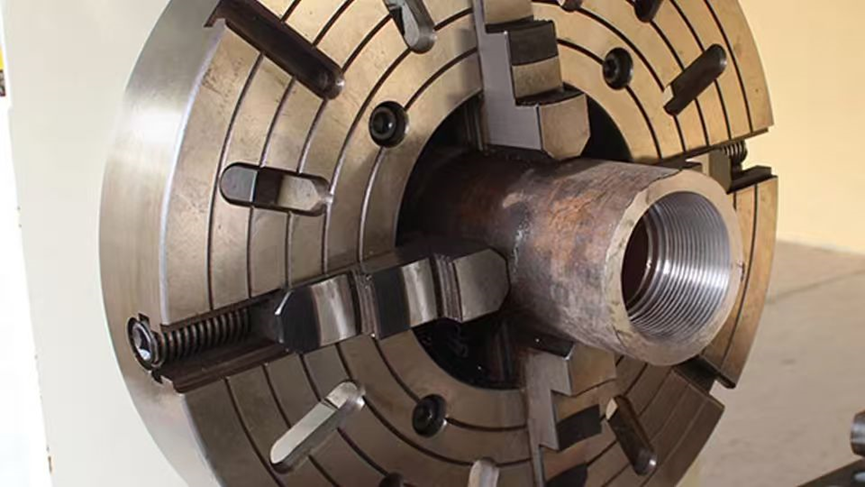
What Is Spindle Bore?
The spindle bore is the internal opening running through the center of the lathe spindle.
For long pipes, bars, and hollow workpieces, this opening allows the material to pass through the headstock. A larger spindle bore is particularly useful for oil casing, tubing, drill pipe, mechanical tubes, and other long tubular components.
In simple terms:
Spindle Bore = Passage Through the Spindle
What Is Pipe Diameter?
Pipe diameter normally refers to the outside diameter (OD) of the pipe being machined.
For a pipe threading lathe, another important specification is the pipe threading range. This defines the range of pipe diameters that the machine is designed to handle for threading operations.
For example, Xinheng's Q1227 conventional pipe threading lathe has a Φ280 mm spindle bore, while its specified pipe threading range is Φ130–270 mm.
Spindle Bore vs Pipe Diameter
Item | Spindle Bore | Pipe Diameter |
Refers To | Internal spindle opening | Actual pipe OD |
Machine or Workpiece Parameter? | Machine parameter | Workpiece parameter |
Main Purpose | Determines passage capacity | Defines workpiece size |
Important For | Passing long pipes through spindle | Clamping and machining |
Same as Threading Range? | No | No |
Selection Rule | Must provide sufficient usable passage | Must fit machine processing capacity |
The key point is:
Spindle Bore ≠ Pipe Diameter ≠ Pipe Threading Range
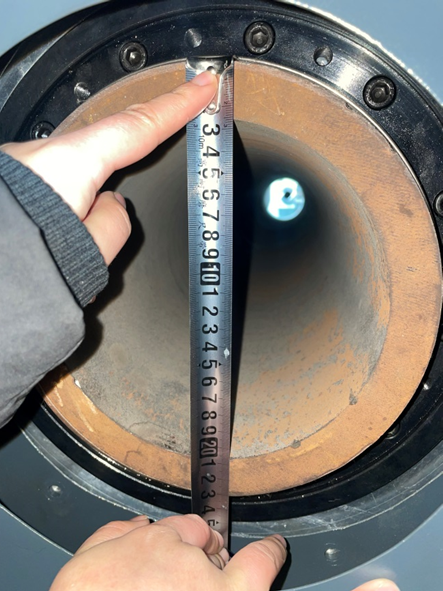
Who Should Pay Special Attention to These Parameters?
These specifications are especially important for manufacturers machining:
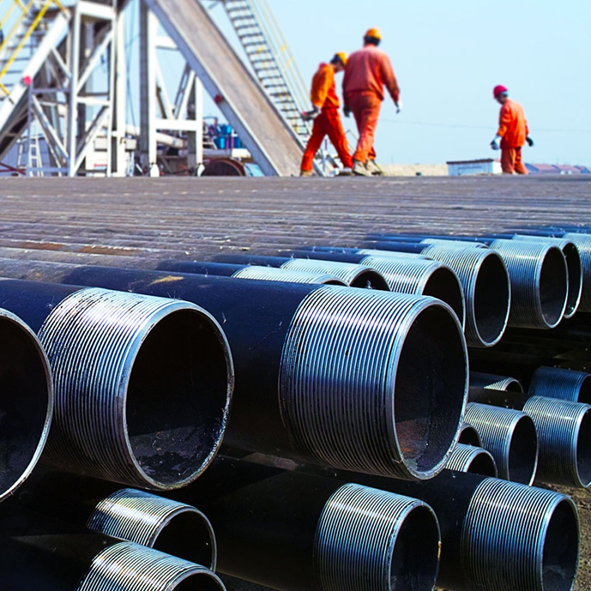
For example, Xinheng's CNC pipe threading lathe range includes machines with spindle bores from Φ135 mm upward, with corresponding pipe threading ranges selected according to each model.
How to Choose the Correct Spindle Bore
Do not select a spindle bore simply by matching it exactly to the pipe OD.
If your maximum pipe OD is Φ190 mm, you should first determine whether the pipe needs to pass completely through the spindle. Then check:
Xinheng's own selection guidance similarly recommends choosing spindle bore according to the maximum pipe OD that must pass through the spindle while allowing for clamping and machining requirements.
FAQ
Is spindle bore the same as maximum pipe diameter?
No. Spindle bore describes the spindle opening, while maximum pipe diameter describes the workpiece size the machine is designed to accommodate.
Can a Φ280 mm pipe pass through a Φ280 mm spindle bore?
It should not be assumed. A nominally equal diameter provides no practical clearance, and the complete spindle/chuck arrangement must also be considered.
Is a larger spindle bore always better?
No. The correct spindle bore should match the workpiece range and production requirements. An unnecessarily large machine may increase investment without providing a practical benefit.
What information should I send when choosing a pipe lathe?
Provide the pipe OD, ID or wall thickness, length, material, thread specification, machining drawing, and production quantity.
At Anyang Xinheng Machine Tool, conventional and CNC pipe threading lathes are available with different spindle bore and pipe processing capacities. Send us your workpiece drawing, and we can recommend a suitable machine configuration.
Message
If you have any suggestions or question for us.Please contact us.


